Oral surgery & implant dentistry

Perhaps a tooth needs to be removed, or you would like to replace a missing tooth. Both begin with an examination and a clear discussion: what is needed, what alternatives are available, and what does treatment involve?

What happens during these procedures

Tooth extraction
  1. Checking the tooth and surrounding area

    We assess the tooth and explain why removal may be appropriate. We take an X-ray if needed.

  2. Removing the tooth under local anaesthesia

    We numb the area, loosen the tooth and remove it. If needed, we close the wound with a stitch.

  3. Supporting healing

    We explain what to consider at home and when we will check the wound. Where needed, we discuss options for replacing the missing tooth.

Assessing wisdom teeth
  1. Checking the position and symptoms

    We assess whether the wisdom tooth is causing symptoms or putting the neighbouring tooth at risk. An X-ray may help with the assessment if needed.

  2. Discussing the approach

    Whether monitoring or removal is appropriate depends on the findings. If a procedure is needed, we discuss how it will be planned.

Dental implant
  1. Planning the implant

    We check whether there is enough jawbone and discuss the type of restoration that will be fitted to the implant.

  2. Placing an artificial tooth root

    We place the implant in the jawbone. Healing and whether a temporary restoration is possible depend on your individual circumstances.

  3. Fitting the restoration

    We usually attach the crown, bridge or denture after the implant has healed. We show you how to care for your implant.

Bone augmentation
  1. Assessing the jawbone

    Using the examination and suitable imaging, we check whether there is enough jawbone for an implant.

  2. Building up missing bone

    Where bone is lacking, we augment the affected area using your own bone or a bone substitute.

  3. Coordinating healing and implant placement

    Depending on the findings, bone augmentation may be possible when the implant is placed. In other cases, we allow the augmented area to heal first.

Sinus lift (bone augmentation in the upper jaw)
  1. Checking the bone in the upper jaw

    We assess whether there is enough bone beneath the maxillary sinus to support an implant.

  2. Creating space for bone augmentation

    We carefully lift the membrane at the base of the maxillary sinus. This allows us to place bone or bone graft substitute material beneath it.

  3. Planning the timing of implant placement

    Depending on the amount of existing bone, the implant may be placed during the same procedure. Otherwise, we allow the augmented area to heal first.

More about the treatment

When a tooth cannot be saved

A tooth may need to be removed if it is too severely damaged. With wisdom teeth, too, the individual findings are what matter. Not every wisdom tooth growing at an angle needs to be removed. We explain why a procedure may be considered and the reasons for or against it or an alternative.

What an implant can do

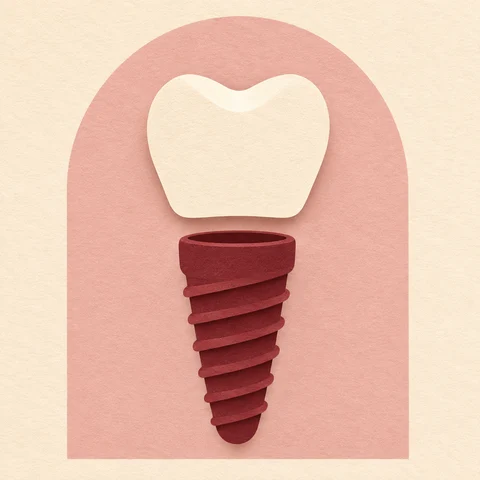
An implant is an artificial tooth root placed in the jawbone. It can support a crown, a bridge or an attachment for a removable denture. Suitable conditions are necessary, including sufficient bone and healthy surrounding tissues. An implant is not the only or best solution in every situation.

Bone augmentation and sinus lift

If there is not enough bone, augmentation may be an option. We determine the appropriate method based on the examination. During a sinus lift, the membrane lining the floor of the maxillary sinus is raised in the back part of the upper jaw to create space for additional bone material. Whether this is necessary is decided individually.

Planning the procedure and healing

Before treatment, we discuss the procedure, anaesthesia, risks and aftercare. Depending on the procedure, risks may include impaired wound healing or injury to neighbouring structures. We explain what to look out for at home and when a follow-up is needed. A fixed healing time cannot be promised for everyone.

Ongoing care remains important

Implants and the surrounding tissues need careful cleaning and regular checks. Inflammation can develop around implants too. We cannot promise lifelong stability or guaranteed protection against bone loss. We first assess any other changes in the mouth or jaw and discuss the appropriate treatment approach.

Arrange a consultation

Call us or arrange a consultation. If you are currently in pain, please mention this when booking so we can assess the urgency.

Professional sources for further reading

Arrange an appointment

Private dental practice · private billing · no direct billing to statutory health insurers

Book onlineCall us