More about the treatment
A scan instead of impression material
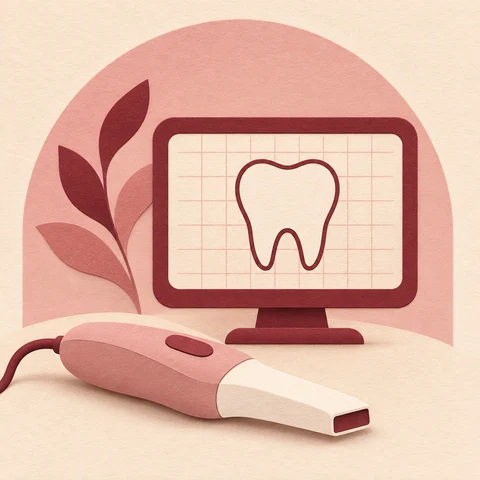
For a ceramic restoration, we first prepare and shape the affected tooth. We then scan the prepared tooth using a small camera. The digital model can replace a conventional impression.
Which restoration may be suitable?
Depending on the findings, inlays, onlays or partial crowns, crowns and veneers can be produced digitally. Inlays replace part of the tooth structure; larger restorations may also cover tooth cusps. Veneers are thin shells for suitable visible tooth surfaces. For smaller bridges, too, we assess whether a digital manufacturing process is appropriate.
Planning, making and fitting the restoration
Together with you, we design the shape on screen. The machine mills your restoration from a ceramic block directly in the practice. You can watch from the waiting room. We then finish the surface, polish the ceramic and glaze it depending on the material. Before fitting it, we check the fit and how your teeth meet when you bite.
Can everything be done in one appointment?
When we fit the ceramic restoration in the same appointment, we generally only need to numb the tooth once. You do not need a temporary restoration and can go home with the finished ceramic restoration. If an adjustment requires more time or preliminary treatment is needed, we arrange a follow-up appointment. We discuss the expected time needed in advance.
Digital models for aligners too
Digital models can also support aligner treatment planning. Aligners are clear, removable trays that gradually move teeth. We assess suitability based on tooth alignment and oral health. A scan alone does not determine the appropriate treatment.
Ask us about the right approach for you
Book a consultation and tell us which tooth or existing restoration is worrying you. You do not need to decide on CEREC or a particular material beforehand.